Antarctica's Ice Sheet Under Attack: Hidden Underwater Storms Accelerate Melting
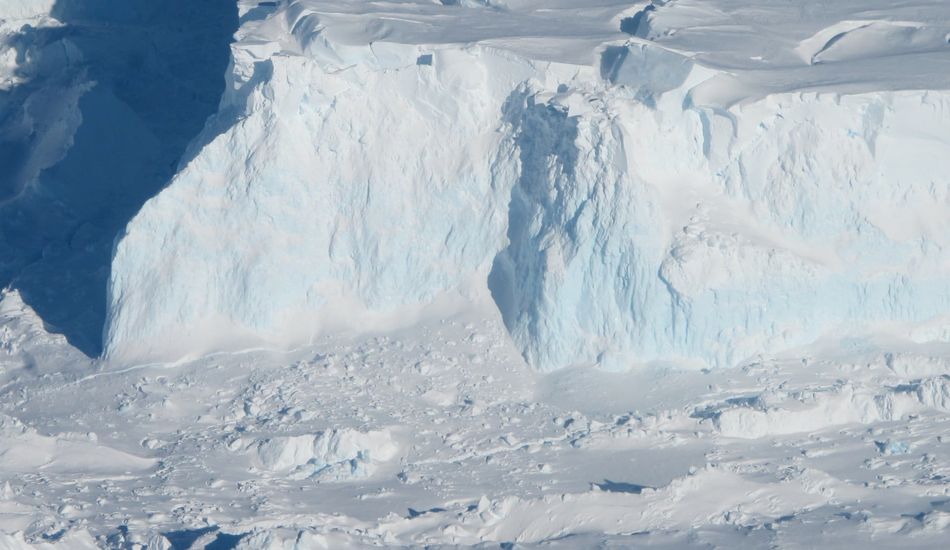
The West Antarctic Ice Sheet is HUGE; covering 760,000 square miles and reaching over a mile thick. If it were to melt entirely, it could raise global sea levels by a staggering 10 feet! Now, I know what you're thinking: that's a slow process, right? Well, scientists are finding increasing evidence that this ice is in more danger than we thought.
Think of it like this: it's not just a slow, steady melt; it's like a bunch of dominoes falling, with one change triggering another. And here's a new worry: underwater "storms" are now joining the fray. A new study suggests that these vortices are pulling relatively warm waters under the ice shelf, potentially speeding up its destruction.
The seas around the ice shelf might look calm, but they are actually pretty chaotic. Strong winds whip across the surface, and the freezing and melting of ice throws the water's density into disarray. When ice freezes, it spits out salt; when it melts, it dumps fresh water. This creates vortices that suck up warmth from the depths, which, according to Mattia Poinelli, resembles a storm.
This is bad news because it messes with the layer of cold water that normally protects the ice from melting. Think of it like having a cozy blanket of cold water keeping the ice safe. But these storms rip that blanket away, exposing the ice to warmer temperatures. Other research shows that the underside of the ice isn't flat either; it's uneven. This creates currents that expose the ice to warm water. It's like the ice shelf has wrinkles that allow warm water to get in and cause trouble. We're just beginning to understand these processes!
The Domino Effect
So, why are these underwater storms such a big deal? Well, that floating ice shelf acts like a cork, holding back the glacier resting on land. If the shelf melts and breaks apart, the glacier will slide into the ocean faster, causing sea levels to rise.And it's not just the storms. The sea ice surrounding Antarctica is also disappearing at an alarming rate. This ice normally acts as a buffer, absorbing wave energy and keeping the ocean temperatures cool. It reflects the sun's energy back into space, kind of like a giant mirror. But as it disappears, the dark water absorbs the heat instead, making things even worse.
As more sea ice melts and the ice shelf degrades, more fresh water enters the ocean, leading to even more of these melting-inducing storms. It's a vicious cycle! According to Poinelli, these effects may become more common in other areas of Antarctica as the climate changes.
These storms may also explain the retreat of Antarctica's grounding lines - where the ice lifts off the land and begins floating on the ocean. As fresh water flows beneath the ice sheet, it creates turbulence that draws up warm water, further accelerating melting. This can cause grounding lines retreat up to 2,300 feet a year, with warm water accessing more parts of the glacier, eating away at the ice and making the entire sheet system less stable.
The storms add to the grounding line attack. According to Pietro Milillo, these storms punch beneath the ice and accelerate melt and the retreats can be partially explained with these underwater storms.
However, how much more melting we'll see due to these storms is still a mystery. The finding is based on a model, although scientists have seen similar dynamics in another Antarctic area. To get a better idea of how fast the ice will disappear and how quickly sea levels will rise, scientists desperately need more data. Milillo noted that Antarctica can change on timescales of days or weeks, that's why we need to monitor the underside of the ice shelf with the same urgency we monitor atmospheric storms.
Source: Gizmodo